
- 91% of men believe that being a friend is a key quality of manhood
- 81% of men believe being a parent is the best job in the world
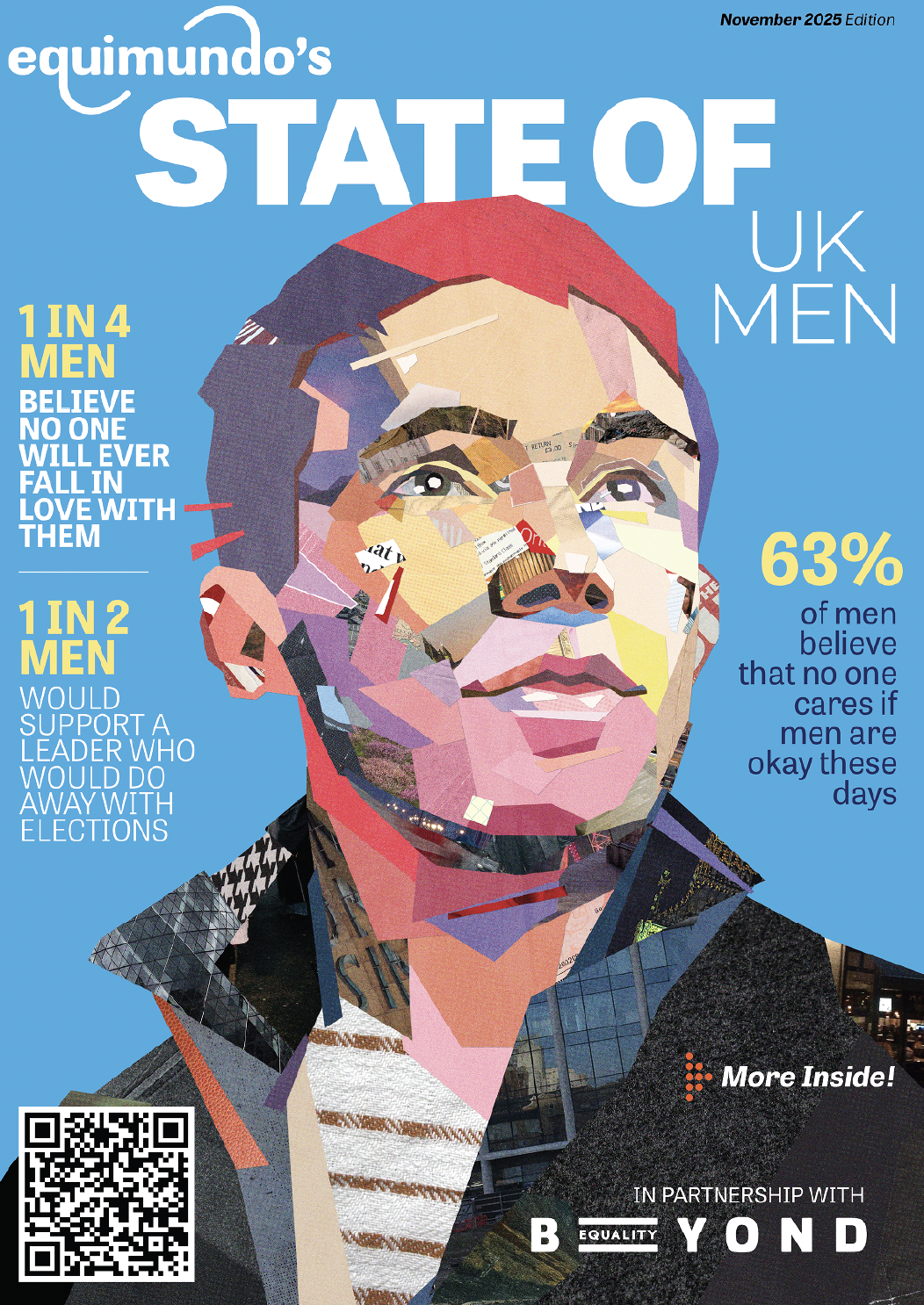
- 1 in 4 men believe no one will ever fall in love with them
- 49% of men aged 18-24 wish they were more masculine
- 44% of men & women have given up on the idea of a relationship
- 50% of men endorse red pill rhetoric (gender regressive & misogynistic) ideology
- 15% of men have interacted with an AI/virtual partner
- Over 50% of men believe that feminism is about favouring women over men
- 68% of men believe that men should be more ‘respected’ in society
- 62% of men believe women expect too much in relationships
- Almost 60% of men & women believe migration has made the country a better place
- 75% of men expressed support for equal pay
- 50% of men feel their political leaders don’t care about their future
These figures from new study – State of UK Men 2025 – from Equimundo: Center for Masculinities and Social Justice and Beyond Equality reveal there is reason for both worry and hope. Almost two-thirds of men in the UK feel unseen or uncared-for in public life, 40% are grappling with financial precarity, over half of men constantly worry about their financial future and 44% report having given up on finding love completely.
Yet, the study also reveals that the majority of men say that care, family and connection with friends and others are what give their lives meaning with 91% of men and women affirming that friendship is the quality they most associate with being a man today. 81% of men say that being a parent is the best job in the world, and over half say care and family policies shape how they vote.
The State of UK Men is a new UK-wide study based on a survey of over 2,100 men and women aged 18-45, providing a data-driven insight into the emotional, economic, and cultural pressures facing men in the UK. It is one of the few UK-wide studies of men to investigate the impacts of ideas of masculinity on men’s health, relationships and politics, and the implications for men themselves as well as women and others.
The study examines men’s sense of economic stability, their outlook on the future, their social and romantic lives – both online and offline – their health and well-being, political outlook, and family lives, and provides actionable recommendations for government, civil society, and communities in the UK to engage men and boys in the fight for gender equality.At a time when narratives around masculinity are increasingly divisive and distorted, this study helps shift the narrative on what is driving men’s increasingly polarising and socially isolating behaviours and attitudes and explores what can be done to support men’s connection and allyship. The research informs the work that both Beyond Equality and Equimundo and Beyond Equality do to engage men and boys in schools, via sports groups, with content creators and via public services to promote conversations about healthy, connected masculinities.
Gary Barker, President and CEO, Equimundo says;
“There is reason for both hope and worry – the findings of thestudy are clear: ideas of what it means to be a man in the UK today are expanding, some more restrictive ideas remain prevalent and alluring to many men. But there is also real cause for optimism. Men across the UK want and are ready to centre care, connection, and community in their lives. By asking the right questions and investing in the right solutions, we can tip the balance towards men’s care.”
Dan Guinness, Managing Director, Beyond Equality, says;
“Amid growing concerns about men’s health, social isolation, unemployment, and gendered violence, there is a pressing need for thoughtful, coordinated approaches to address these complex challenges. Across the UK, important progress is being made to engage men and boys in developing deeper, more connected understandings of themselves and their roles in society. For this progress to be sustained and effective, it must rest on shared principles that recognise the diversity of masculinities, the realities of precarity and power, and the fundamental importance of purpose, care, and connection.”The report also includes contributions from The Children’s Society and Movember and is supported by The Caring Masculinities Fund.
Read the full report HERE